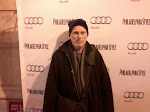
Meanwhile in New York I saw Elodie Lauten’s opera The Death of Don Juan. Over the years Mary Hurlbut has sung my poetry set to music by Elodie. Mary shines in Don Juan, as do Alisha Desai, Courtenay Symonds, Arianna Armon, Douglas McDonnell and Jonathan Hirschman. The Death of Don Juan plays at the Theater for the New City through May 22. Who and what killed Don Juan?
Friday, May 13, 2011
Wednesday, January 26, 2011
Somebody Thought They Knew Something Once: Freedom from Academic Speech
Suddenly at the University of Chicago I discovered I could no longer tolerate literary criticism. I had noticed that anthologies of poetry and anthologies of art criticism seemed to have the same authors--Ashbery, Benedikt, Schjeldahl, O’Hara, et cetera--and all these writers seemed to live in New York. So I transferred to Columbia and decided to interview poets for my dissertation. Why not? Sexual Politics by Kate Millet had been a Columbia dissertation.
What is literature? Pound fortunately died before I was to interview him, but W.H. Auden was around, and I therefore had to interview him. But there had been many books about Auden. One friend won a huge scholarship to write on James Joyce. But after a few years, he went mad. Too much to read.
Aside from Auden, the other poets were in their forties; there had been reviews and profiles but no studies. Fortunately I was able to finesse Auden; he was from an older generation and, unlike the younger poets, wouldn’t allow a tape recorder. His interview had no introduction, no annotated bibliography. Let’s face it, anyway--literature since Byron has been dominated by fiction. Novels portray race, class, gender, war and social upheaval. I rarely read novels. I write brief articles on living poets and art criticism for money. In 30 years my Unmuzzled OX published two short stories and one literary essay.
I find philosophical interpretations of poetry difficult to read. My psychoanalyst translated the pre-eminent living European philosopher. I didn’t know this. Psychoanalysis was itself boring; I underwent analysis to please my wife. After six months I happened to pick up a book by the preeminent European philosopher, and saw that my sleepy-headed bore of a psychoanalyst had translated it. I bought the book, and read it avidly, and hated it. At our next session I mentioned I had discovered his other job. He asked, What did you think of my book?
*
Wednesday was my first fully functional day back in New York. I couldn't really face yesterday, and basically stayed in bed. So I was up early today. When I'm having a hard time knocking the world into focus, for some reason, Butler’s The Lives of the Saints helps. Wednesday it was Paul. Today it's Thomas Aquinas, the older contemporary of Dante. They never met. But Thomas’ scholastic Summa seems equivalent to Dante's Commedia. They both thought everything essentially was knowable.
At least somebody thought they knew something once.
What is literature? Pound fortunately died before I was to interview him, but W.H. Auden was around, and I therefore had to interview him. But there had been many books about Auden. One friend won a huge scholarship to write on James Joyce. But after a few years, he went mad. Too much to read.
Aside from Auden, the other poets were in their forties; there had been reviews and profiles but no studies. Fortunately I was able to finesse Auden; he was from an older generation and, unlike the younger poets, wouldn’t allow a tape recorder. His interview had no introduction, no annotated bibliography. Let’s face it, anyway--literature since Byron has been dominated by fiction. Novels portray race, class, gender, war and social upheaval. I rarely read novels. I write brief articles on living poets and art criticism for money. In 30 years my Unmuzzled OX published two short stories and one literary essay.
I find philosophical interpretations of poetry difficult to read. My psychoanalyst translated the pre-eminent living European philosopher. I didn’t know this. Psychoanalysis was itself boring; I underwent analysis to please my wife. After six months I happened to pick up a book by the preeminent European philosopher, and saw that my sleepy-headed bore of a psychoanalyst had translated it. I bought the book, and read it avidly, and hated it. At our next session I mentioned I had discovered his other job. He asked, What did you think of my book?
*
Wednesday was my first fully functional day back in New York. I couldn't really face yesterday, and basically stayed in bed. So I was up early today. When I'm having a hard time knocking the world into focus, for some reason, Butler’s The Lives of the Saints helps. Wednesday it was Paul. Today it's Thomas Aquinas, the older contemporary of Dante. They never met. But Thomas’ scholastic Summa seems equivalent to Dante's Commedia. They both thought everything essentially was knowable.
At least somebody thought they knew something once.
Saturday, July 17, 2010
No Poetry!
At one time Andy Warhol seemed the pinnacle of mysterious fame and glamour -- beyond comprehension. He certainly seemed that way to me -- and I published interviews with him in three different magazines. But when Andy died ten years later, it turned out he was secretly a practicing Roman Catholic. I was surprised. So were people like Allen Ginsberg and William Burroughs. I was raised Catholic. The Banal Catholic Church I call it; it’s as real as sparrows. Allen and William were not raised Catholic; now they understood why they hated Andy.
Over five years of welcome at the Union Square north Factory, Andy asked me to interview anybody for his magazine, Interview. I decided to interview Daniel Berrigan, S.J., a poet and activist. Bob Colacello was Interview’s right-wing editor and he was skeptical. Nor did Dan understand Andy. Andy to Dan symbolized wealth and decadence. Colacello rejected the interview.
Interview was originally Inter-View. Gerard Malanga was the first editor of Inter-View. He viewed Andy’s magazine as an update of Charles Henri Ford’s avant-garde magazine View. And consequently in his first issue Gerard published poetry by Kenward Elmslie. Andy was annoyed. “No Poetry!” Andy ruled.
Poetry is not Pop Art. Catholicism however is always art.
*
My interviews with Andy were in the old print Unmuzzled OX, Art NEWS and Small Press Review. The Small Press Book Fair at the time was offered a free billboard. Suzanne Ostro, the Book Fair organizer, suggested I trade Andy a free table for Interview if he would do the billboard. After approximately ninety seconds consideration, Andy agreed. When the other exhibitors got wind, however, they were outraged. They didn’t understand Andy either but they knew they disliked him. The billboard was never done.
Over five years of welcome at the Union Square north Factory, Andy asked me to interview anybody for his magazine, Interview. I decided to interview Daniel Berrigan, S.J., a poet and activist. Bob Colacello was Interview’s right-wing editor and he was skeptical. Nor did Dan understand Andy. Andy to Dan symbolized wealth and decadence. Colacello rejected the interview.
Interview was originally Inter-View. Gerard Malanga was the first editor of Inter-View. He viewed Andy’s magazine as an update of Charles Henri Ford’s avant-garde magazine View. And consequently in his first issue Gerard published poetry by Kenward Elmslie. Andy was annoyed. “No Poetry!” Andy ruled.
Poetry is not Pop Art. Catholicism however is always art.
*
My interviews with Andy were in the old print Unmuzzled OX, Art NEWS and Small Press Review. The Small Press Book Fair at the time was offered a free billboard. Suzanne Ostro, the Book Fair organizer, suggested I trade Andy a free table for Interview if he would do the billboard. After approximately ninety seconds consideration, Andy agreed. When the other exhibitors got wind, however, they were outraged. They didn’t understand Andy either but they knew they disliked him. The billboard was never done.
Saturday, June 26, 2010
Going Down
Jill’s daughter Jennie wrote a dirty novel, and Madonna bought the film rights. All Jill got out of it was free passes to insanely expensive New York gyms. At one especially nauseating lemon grass joint the only other customer was a dirty sweaty bottle blonde,
“But Mom,”said Jennie, “that was Madonna.”
Thursday, June 24, 2010
3 Riots in One Good Year
On this day in 1968 my French Canadian girl friend took me to the Parade. It is Jean le Baptiste day, the Fete Nationale in Quebec. She kept saying the guys were at Parc Lafontaine, and that’s where we headed. Do I remember mounted police? There were definitely many police cars. For practice the guys turned a police car over and set it aflame. Then they tossed bottles with burning wicks filled with some liquid in the general direction of the review stand. And who was there? Oh. Him. That would be Prime Minister Pierre Trudeau. The idea made complete sense: Kill him! After all he opposed a free and independent Quebec. Vive le Quebec libre! Unfortunately the Molotov cocktails failed in their intent. And abruptly the resurgent authorities counter-charged. They drove us into the Parc. La mentalite Anglaise! my girlfriend cursed. Les maudits anglais! And this was, mind you, but the second of three excellent riots that year. The first was at McGill on one cold motherfucking winter night. The last was in Chicago, at the convention of the Democratic Party. 1968! What a great year!
Tuesday, November 03, 2009
Magicians of the Earth Revisited
John Baldessari that bastard, the late Jimmie Byers, the late Nancy Spero, august Louise Bourgeois, Claes the great Oldenburg, and Alighero e (and) Boetti are International School artists sharing space with Third World or “marginal” or “vernacular” or “outsider” artists in Back to the Earth: Revisiting Magiciens de la Terre at Fleisher/Ollman in Philadelphia through December 5.
The original Magiciens de la Terre (Magicians of the Earth) opened twenty years ago at the Pompidou in Paris, united the diverse esthetics in this show, and subsequently served as a curatorial template for the dissolution of the dichotomy between insider international Big Boy art and the local outsider Little Guy stuff. Such is Fleisher/Ollman’s especial forte.
The best piece in the current show is by James Lee Byers. Byers was an insider’s outsider. The retired epistemologist, John Brockman, introduced me to Jimmy, and I published him in the Unmuzzled OX newspaper. As I continue to encounter his work years after his death, I am always struck by its beauty and brilliance, its modesty and wit. To me, Byers takes the academic beyond the vernacular into the truly Universal.
The Village Voice, on the other hand, asked me years ago to interview John Baldessari. I published John, too, in an OX paperback. But I have unfortunately come to regard him as Mister Cal Arts Lightweight. His reputation greatly exceeds his achievement. To me, his art is “academic” in the particular sense of “irrelevant.” Baldessari represents Big Boy Art at its shallow pretentious worst. John is personable and charming, but that only serves to conceal his vacuity -- and, of course, makes me personally feel like a mean-spirited ingrate.
Of the outsider art my favorite is a wooden Australian aboriginal “shield” portraying two Joeys. You know Joey, right? The baby kangaroo? The artist goes by the name Murumuru today at Fleisher/Ollman, but 20 years ago in Paris he was called Wunuwunu. Something tells me he did not attend Cal Arts.
And who could dislike the coffin car by Kane Kwei?
But the most interesting piece in terms of the theme of the show is Trixie of the Night by Julio Galan. I loved this painting. Is it Surrealism? Or is it the “primitivism” which Breton and Freud so admired? Or should the distinction matter?
The original Magiciens de la Terre (Magicians of the Earth) opened twenty years ago at the Pompidou in Paris, united the diverse esthetics in this show, and subsequently served as a curatorial template for the dissolution of the dichotomy between insider international Big Boy art and the local outsider Little Guy stuff. Such is Fleisher/Ollman’s especial forte.
The best piece in the current show is by James Lee Byers. Byers was an insider’s outsider. The retired epistemologist, John Brockman, introduced me to Jimmy, and I published him in the Unmuzzled OX newspaper. As I continue to encounter his work years after his death, I am always struck by its beauty and brilliance, its modesty and wit. To me, Byers takes the academic beyond the vernacular into the truly Universal.
The Village Voice, on the other hand, asked me years ago to interview John Baldessari. I published John, too, in an OX paperback. But I have unfortunately come to regard him as Mister Cal Arts Lightweight. His reputation greatly exceeds his achievement. To me, his art is “academic” in the particular sense of “irrelevant.” Baldessari represents Big Boy Art at its shallow pretentious worst. John is personable and charming, but that only serves to conceal his vacuity -- and, of course, makes me personally feel like a mean-spirited ingrate.
Of the outsider art my favorite is a wooden Australian aboriginal “shield” portraying two Joeys. You know Joey, right? The baby kangaroo? The artist goes by the name Murumuru today at Fleisher/Ollman, but 20 years ago in Paris he was called Wunuwunu. Something tells me he did not attend Cal Arts.
And who could dislike the coffin car by Kane Kwei?
But the most interesting piece in terms of the theme of the show is Trixie of the Night by Julio Galan. I loved this painting. Is it Surrealism? Or is it the “primitivism” which Breton and Freud so admired? Or should the distinction matter?
Tuesday, September 22, 2009
BUD AND JACK
If you drink don’t drive; write poetry. “In Search of the Auden Martini" by Rosie Schaap is the cover story on the Poetry Foundation website. Here's a direct link to the piece: http://www.poetryfoundation.org/journal/article.html?id=237628. Note the excellent recipe for the Andre Cocktail.